
Win/loss analysis · 5 min read
The black box in the sales team.
What a plane crash and an operating theatre can teach sales teams about the deals they lose.
A routine operation.
On 29 March 2005, Elaine Bromiley, a 37-year-old mother of two, went into hospital for a routine sinus operation. Her husband, Martin, expected her home that evening.
Shortly after she was anaesthetised, her airway closed. The team could not get oxygen into her lungs.
Two consultant anaesthetists and a consultant ENT surgeon, all highly experienced, began trying to insert a breathing tube. When that failed, they tried again. And again.
Her oxygen levels fell to 40 per cent and stayed at or below that for around 20 minutes.
The nurses in the room could see where this was heading. One fetched a tracheostomy kit, which opens an airway directly through the neck, and told the consultants it was ready. Another booked an intensive care bed, then cancelled it after seeing the consultants’ reaction.
Nobody acted on either. The doctors were not careless. They were fixated on the one task in front of them, and they lost all sense of how much time had passed.
Elaine never regained consciousness. She died on 11 April 2005.
One of those things.
As Matthew Syed tells it in Black Box Thinking, what happened next is as revealing as the tragedy itself. In healthcare at the time, a death like Elaine’s was not routinely investigated. It was a complication. A tragic, unforeseeable event.
But Martin Bromiley was an airline pilot. In his world, failure is never just one of those things.
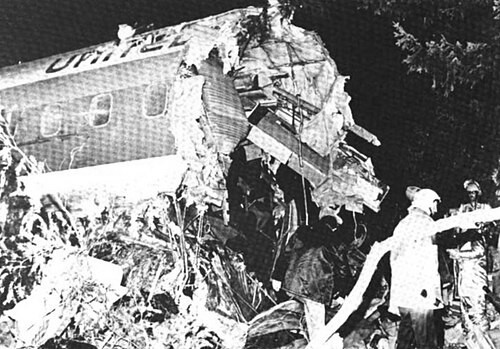
On 28 December 1978, United Airlines Flight 173 was approaching Portland, Oregon, with 189 people on board. As the crew lowered the landing gear, there was a loud thud. The light that should have confirmed the gear was down stayed dark.
The captain, a veteran with decades of experience, put the plane into a hold and set about solving the problem. For around an hour, the landing gear was all he could think about.
About 38 minutes in, the flight engineer spoke up: “Fifteen minutes is gonna really run us low on fuel here.” It was a hint, not a demand. Nothing changed.
The engines began to fail one by one. The captain kept asking why. The plane came down in a wooded suburb short of the runway, and ten people died.
The pattern is identical to Elaine’s operation. Skilled experts fixated under pressure. Someone more junior saw the danger and could not make themselves heard.
The difference is what came after. Aviation recovered the data, investigated without looking for a scapegoat, and changed the way every cockpit works. Crew resource management, now standard across the industry, trains junior crew to speak plainly and captains to listen.
Martin pushed for an independent review of Elaine’s death. It found the same human factors at work. He has spent the years since helping healthcare learn what aviation already knew.
Every lost deal has a convenient explanation.
A lost deal is not a life. But the way sales teams handle failure looks a lot like the way medicine once did.
Think about how your team explains the deals that got away. The price was too high. The timing was wrong. The budget was frozen. They stayed with the incumbent.
Any of those might be true. All of them are comfortable, because none of them is about anything you did or did not do.
Nobody is lying. When you have spent six months on a deal and it goes the other way, admitting you missed something feels like admitting you are not good at your job. So the explanation lands on something outside the room. The CRM says “Closed lost: price”, the pipeline review moves on, and the same blind spot walks into the next deal.
We call this sales blindness. Like the consultants in Elaine’s theatre, sales account managers under pressure fixate on the task in front of them: the proposal, the demo, the close date. The quieter stakeholder, the question that never got a proper answer, the colleague who had a bad feeling about it but did not want to say so, all get missed.
Your buyer holds the black box.
Aviation is not safer because pilots make fewer mistakes. It is safer because, when something goes wrong, someone goes and gets the data.
In sales, the data already exists. Your buyer has it. They know exactly why they chose someone else, what made them hesitate, and the moment they stopped believing you understood their problem.
Getting it takes two things.
The first is openness. Ask the buyer, and ask in a way that makes clear you want the truth, not a second chance at the pitch. Then listen without defending. The moment you explain why they were wrong, the black box closes.
The second is leadership. Aviation did not change because individual pilots became braver. It changed because the industry built a system where speaking up was expected and reporting a mistake was safe.
The same is true of a sales team. If a lost-deal review is a hunt for someone to blame, people will keep writing “price”. If it is treated as an investigation, not a trial, they will start telling you what really happened. That works best when leaders go first and talk openly about the deals they misjudged.
None of this is comfortable. Hearing that you lost a deal because you talked more than you listened is hard. But it is the only information that will make the next deal different.
The takeaway
The teams that get ahead are not the ones that never lose. They are the ones that find out why.
Sources
Want to know why you really lost? We ask your buyers, and bring back what they would not tell your sales team.