
Bids and proposals · 5 min read
The customer at the pump isn’t always the one deciding.
A 40-foot RV, a British wife and a truck stop. Why the person you’re talking to is rarely the one who decides.
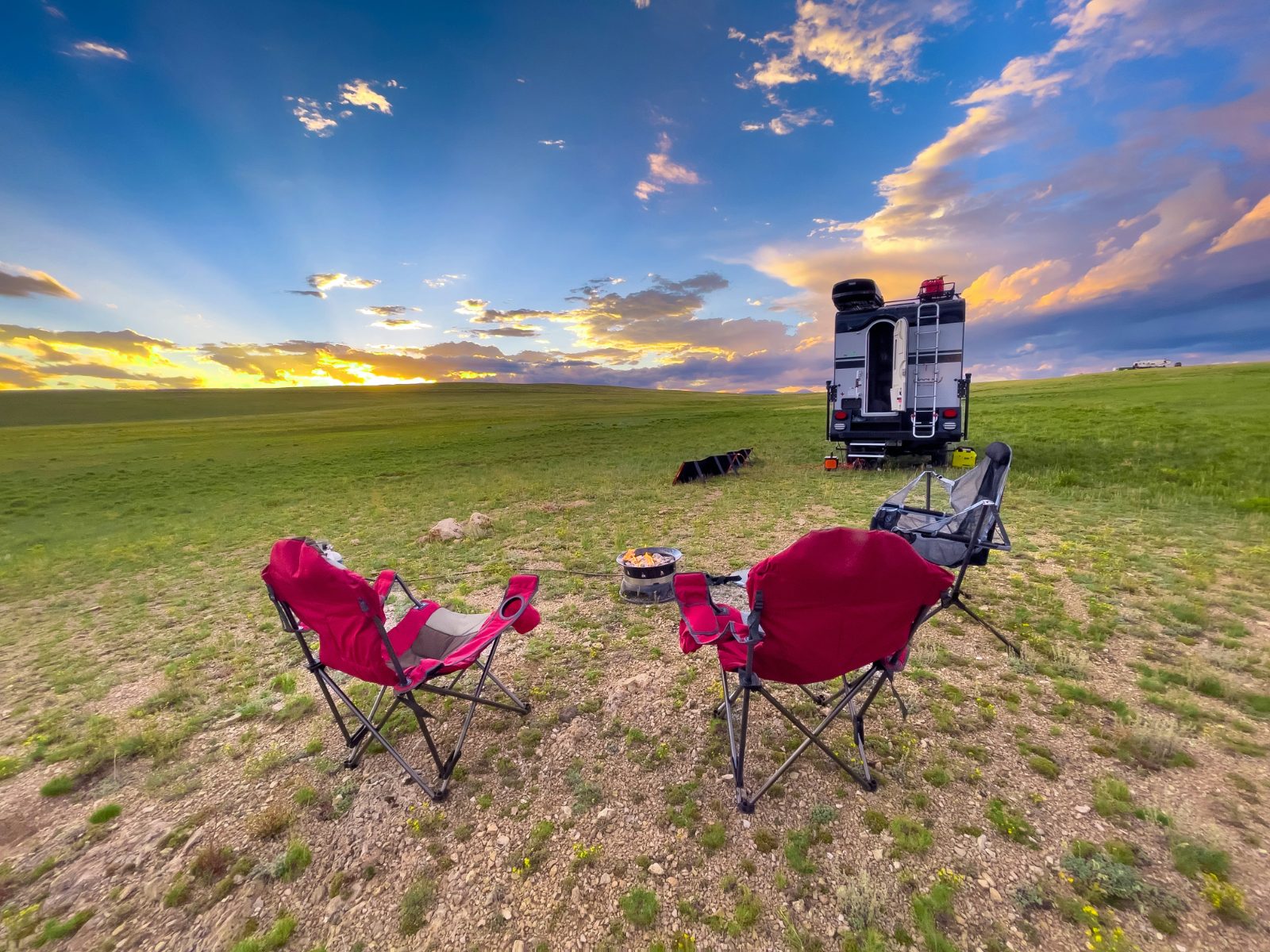
The last resort.
I grew up on American road trips, where a truck stop was at the bottom of the list of places you stopped. You filled up, used the toilets if you had to, and left. They weren’t built for families.
Years later, my wife and I purchased a 40-foot RV and began taking our three children on road trips across the country. A vehicle that size doesn’t fit at an ordinary petrol station. The canopies are too low, there’s no room to turn, and they may not have diesel.
So the truck stop went to the top of the list of places we stopped on a family vacation.
“You need to go in there.”
The first time we filled up the RV, my very British wife, on her first American road trip, took the children inside to use the toilets. I stayed at the pump, quietly amused, waiting for their reactions to a truck stop.
The pump kept running, and they didn’t come out. Just as concern crept in, they appeared. Each child carried a bag of treats, toys, snacks, drinks, and sandwiches, even though the RV fridge was already full. My wife walked up to me and said, “You need to go in there.”
Confused, I went in. The moment I opened the door, the woman behind the counter said hello and asked how I was doing. It was clean and welcoming. It had everything a trucker would need, as I remembered, and everything a family would need, too. I drove away questioning my childhood memories.
500 miles later, when it was time to fill up, my wife began looking for that truck stop. We stopped, had the same welcoming experience, and she came out with a map of every location. For the next five years and 50,000 miles, we planned our routes, and we never fuelled up anywhere else.
I was the one at the pump, so on paper, I was the customer.
I was pumping the petrol, but my wife was the Boss.
But I didn’t make the decision; my wife did. She made it inside the shop while I was outside pumping and paying for diesel. She knew and managed the family’s needs and made sure they were met. After two visits, she’d chosen where our family would buy fuel for the next five years. We could buy diesel at any truck stop, but we chose this one because it also fulfilled the family’s needs.
Bid expert Scott Keyser, in his book Winner Takes All, describes five people inside any serious buying decision. Two make the decision. The others influence it. Our family had two of them.
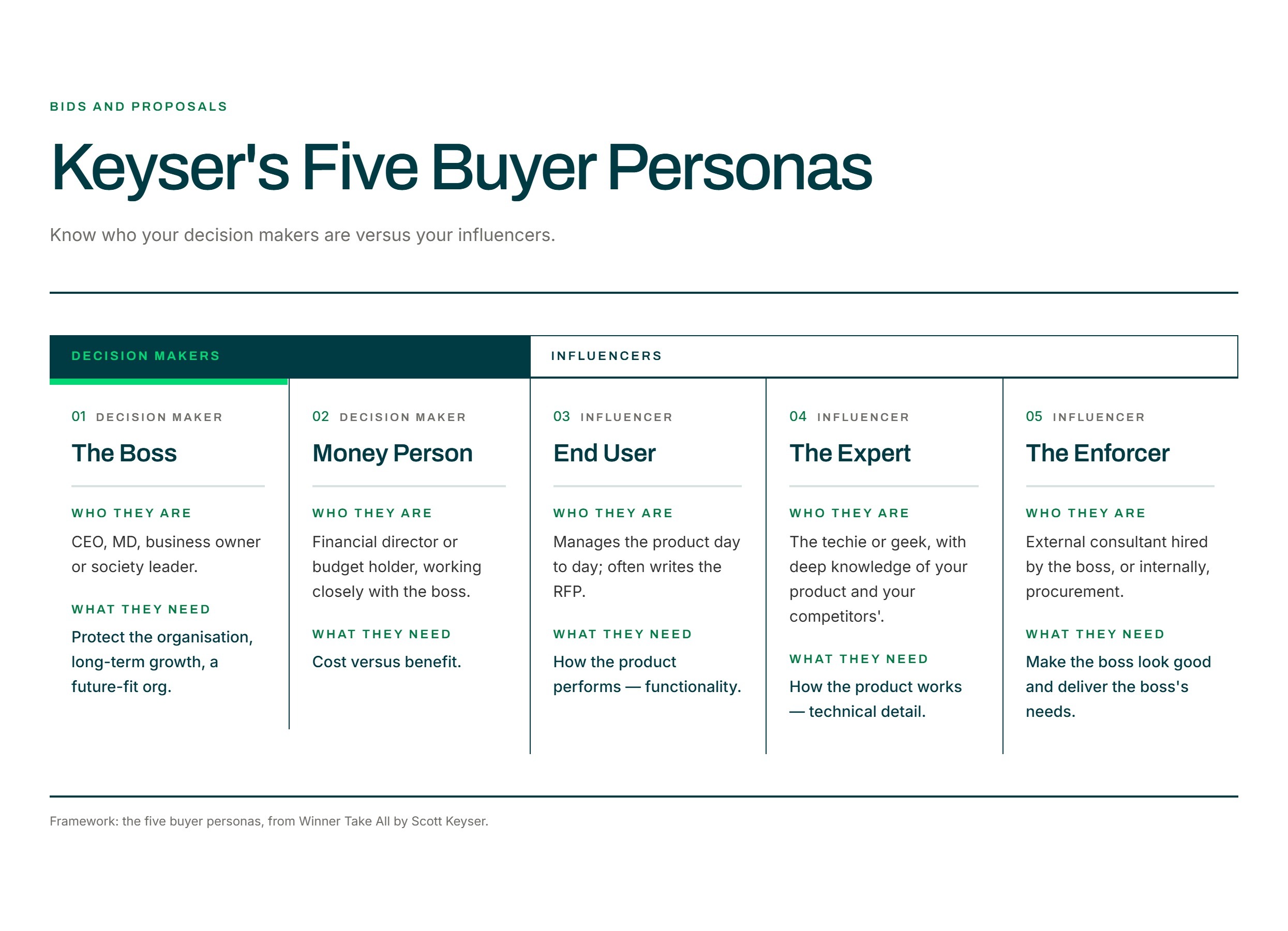
I was the End User. The End User looks after things day to day and judges on function: does it work, is it practical, how much effort will it take? My questions focused on the pump and how easy it would be to manoeuvre this large vehicle. End Users often write the brief, but they rarely make the final call.
My wife was the Boss. The Boss decides and thinks long term. She wasn’t choosing a tank of fuel. She was looking at the broader family needs: clean facilities, safety, food and entertainment for the kids. Then choosing where our family would stop for years.
B2B sales has its own version of this. The salesperson builds a relationship with the End User, usually the main contact. The proposal answers the End User’s questions. The demo is pitched at the End User.
Meanwhile, the Boss is forming a judgement. The Boss doesn’t need what the End User needs. If nothing has been designed for them, they decide on what they’ve seen, and they don’t always say why. Like the truck stop, a strong B2B sales team knows the brief, but also what the Boss wants, and builds a proposition to meet those needs.
Who’s the Boss?
In every deal there’s a Boss who decides whether you get the next five years or never get back in. They may never speak to you at all. Do you know who that Boss is and what they need? Has anyone asked them?
Not sure who the Boss is in your deals? We help your team find them, and build a proposition around what they need.