
Sales strategy · 5 min read
My dad, the sea, and the one place work couldn’t reach him.
In memory of Hugh Maclachlan, 15 years on.
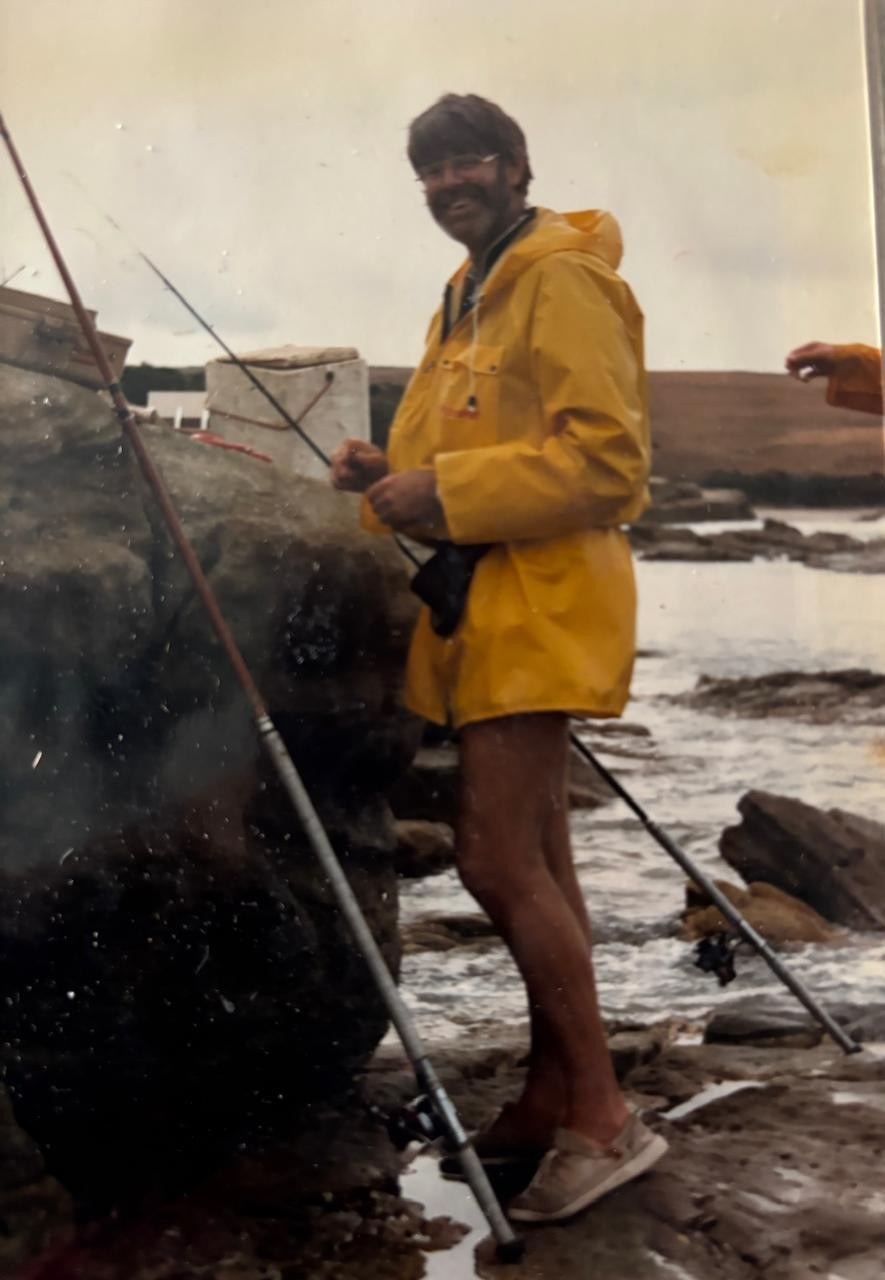
My dad, Hugh Maclachlan, was a very good fisherman. I was not.
Today it is 15 years since Dad died. He was taken far too soon, worn down by the stress of a job that wouldn’t let him go.
He held the top job at one of South Africa’s big banks, and the pressure followed him home. Fishing was one of the few places it couldn’t reach him, and I was often there beside him. That’s why, on this day, it’s the fishing I find myself thinking about.
I loved the time with him. The fishing, less so. I didn’t have the patience for it, and I hated the smell of bait on my fingers. Whatever I ate for days afterwards seemed to taste of it.
It took me years to work out that the difference between us had very little to do with luck.
He knew which fish he was after.
Sea fishing off the South African coast falls into four broad groups: reef fish; open-water game fish; surf, rock and estuary fish; and sharks, rays and skates. Each needs a different rod, a different bait, a different place and a different time.
Dad fished for shad. He chose them for three reasons. They gave him a good fight. They were plentiful. And they were good to eat.
Once he’d made that choice, everything else followed. The right rod. The right bait. The right time of day: early in the morning and in the evening, when the light let the shad feed best.
He wasn’t guessing. He’d decided what he was fishing for before he left the house, and that decision did most of the work. It’s why he came home with a generous bag of shad.
I’d turn up, throw something in and hope.
Most sales teams fish the way I did.
A lot of B2B sales teams work the way I fished. They go after anything that might bite, with whatever’s in the tackle box, whenever there’s a gap in the diary. Then they wonder why the pipeline is full of conversations that go nowhere.
We’ve built the Selling to Humans model to fix that. It’s a figure of eight with two loops, three stages in each, sitting on a shared foundation.
The Selling to Humans model
Strategy into action.
The left loop is everything Dad did before he left the house. We call it sales strategy and structure: a sales organisation with clear choices on where to play, who to reach and how to deliver.
- 1
Choose where to play. Dad chose shad because they were worth the effort. For a business, that means your ideal customer profile, how profitable each segment really is, and an honest view of the market and your competitors. It also means deciding where you deliberately won’t fish.
- 2
Reach the right buyers. Knowing the fish isn’t enough. You need the right spot and the right time. In sales, that’s your sales motion, your channels and partners, and qualification, so your team can tell a shad from a barbel.
- 3
Organise to deliver. The right rod and the right bait. In sales, that’s how your team is structured and paid, how you plan and measure, and the technology and CRM that support it.
Get the left loop wrong and your best people can stand on the rocks all day with nothing.
Then you have to actually fish.
Preparation gets you onto the rocks. It doesn’t land the fish. There’s wind, swell and a cast that has to clear the rocks. Then the small tug on the line, and the patience not to strike too early.
The right loop is that craft. We call it customer driven implementation: a team that knows the human, is prepared to help them buy, and grows every relationship.
- 4
Know the human. You’re not selling to a business. You’re selling to a person deciding on its behalf. That means understanding what the decision means for them personally: their reputation, their worries, what they’ll have to defend if it goes wrong. Buying personas, the value proposition and the buying journey all start here.
- 5
Prepare to help them buy. The best salespeople don’t push. They explain the market, the options and the trade-offs, so the buyer can make a decision they feel confident in. That takes a help-to-buy sales approach, playbooks and collateral built around the alternatives the buyer is weighing, and real practice and coaching.
- 6
Grow the relationship. Reel them in gently, so you don’t lose them at the last moment. Then keep them: customer success, joint business planning, and win/loss analysis.
There’s always one that gets away. Dad never blamed the fish. He’d stand quietly on the rocks and work out what he’d do differently next time.
That’s why the model is a figure of eight, not a straight line. What you learn from the buyers you win and lose flows back into the choices on the left. Underneath both loops sits the foundation: strategy, culture, engagement and alignment.
Choose your fish.
Dad caught plenty of shad because he decided what he was fishing for, prepared for it, and then fished with patience. Strategy took the guesswork out. Craft did the rest.
I still can’t stand the smell of bait. But I understand now what he was doing on those mornings. Fifteen years on, I still think about them. Not for what we caught, but for who he was when he was there.
For Dad
Wherever you are, Dad, I hope the shad are biting.
Is your team fishing for anything that bites? We help you choose your fish, and build the craft to land them.